


DAC in the UK: Our Teesside system is now ramping up
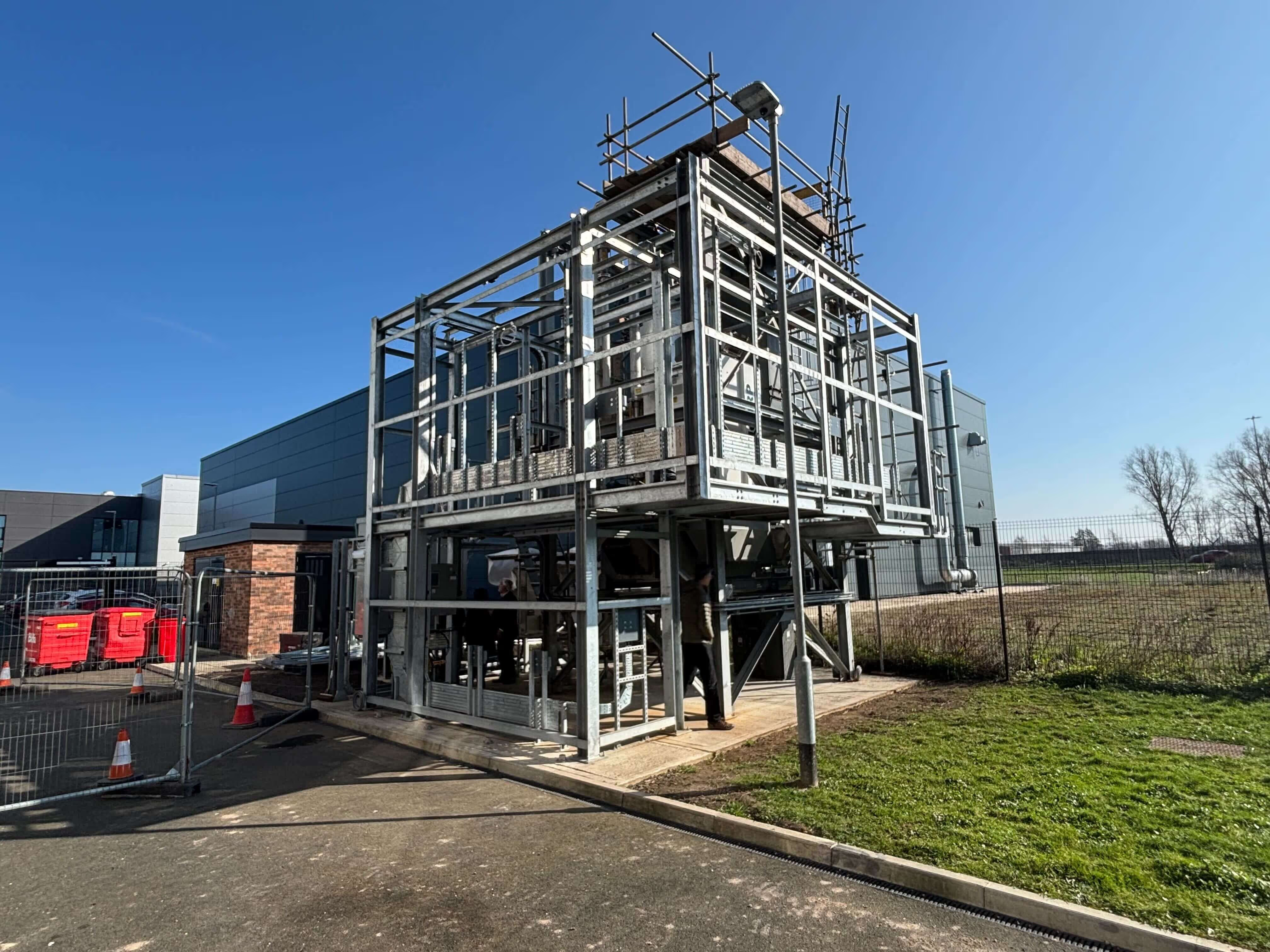
Our DAC pilot in Teesside is now online.
Making everything from steel to chemicals, the Teesside region of England was one of the world’s biggest industrial complexes through the mid-1900s. Now it’s taken on an opposite but more important role as one of Europe’s most advanced industrial decarbonisation hubs. The Teesside region is reworking its “Ironopolis” infrastructure to foster renewable energy, low-carbon fuel, and CO2 storage.
We’re part of it.
We’ve started commissioning Project Tenet, our 60-tonne-per-year direct air capture system, just as the region’s potential for carbon capture, utilisation and storage (CCUS) is turning from plan to reality:
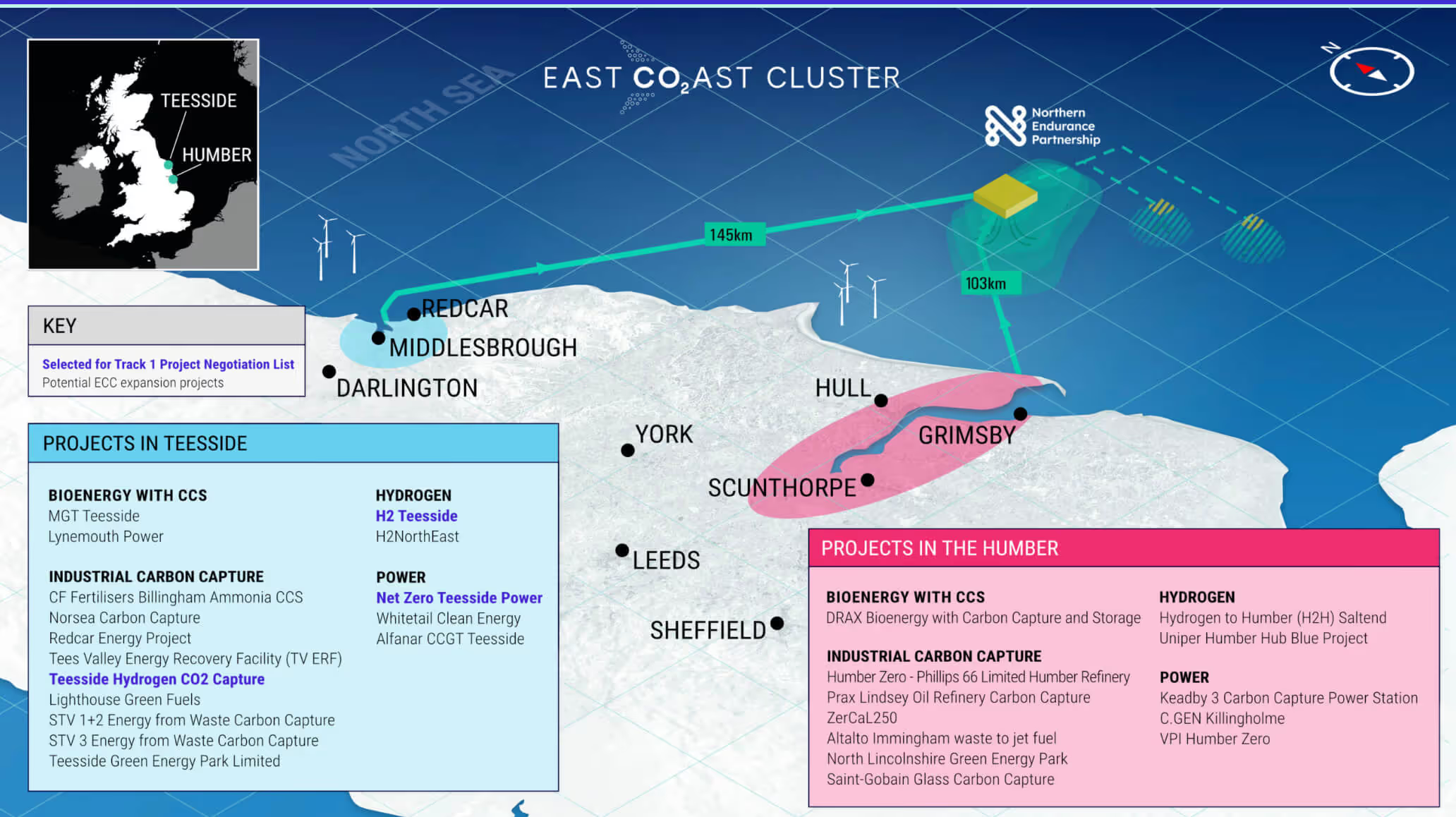
- In 2024 the UK government, after years of preparation, gave the green light to a first set of low-carbon energy and industrial projects through the East Coast Cluster (ECC, see map below). This included an all-important pipeline for transporting CO2 out to the North Sea and injecting it in depleted oil wells deep under the seabed. Drilling for the pipeline is now underway.
- In February this year, the government opened applications for the second round of ECC projects. DAC is one of the eligible technologies. This has catalysed a huge amount of interest and investment in capturing CO2 from regional industry — and maybe now from the air.

Credit: Middlesbrough Council
Project Tenet stands for Teesside Negative Emissions Technologies. The idea of achieving “negative emissions” by capturing CO2 directly from the atmosphere, and not only from legacy industries, has been a key part of the Teesside decarbonisation programme. It also has strong support from the UK government, which champions Teesside as a key location for low-carbon industry. DAC uses the same transport and storage infrastructure as industrial carbon capture. Sharing the costs of pipelines and undersea storage wells will, crucially, lower DAC costs and make the UK a world leader in “negative emissions technologies” by the early 2030s.
We’ve been working to make DAC a reality in the region for three years. Our partners at Teesside University’s Net Zero Industrial Innovation Centre have helped us get here too, as has support from the Tees Valley Combined Authority, Innovate UK and a number of supply chain partners. Today we are unveiling what is, in essence, an integrated DAC system in miniature. Tenet was not meant to be a DAC mega-plant. It was conceived as a pilot to help advance our technology through rapid, pilot-scale iteration — and also to demonstrate how DAC can work, both on its own and within a wider industrial decarbonisation cluster.
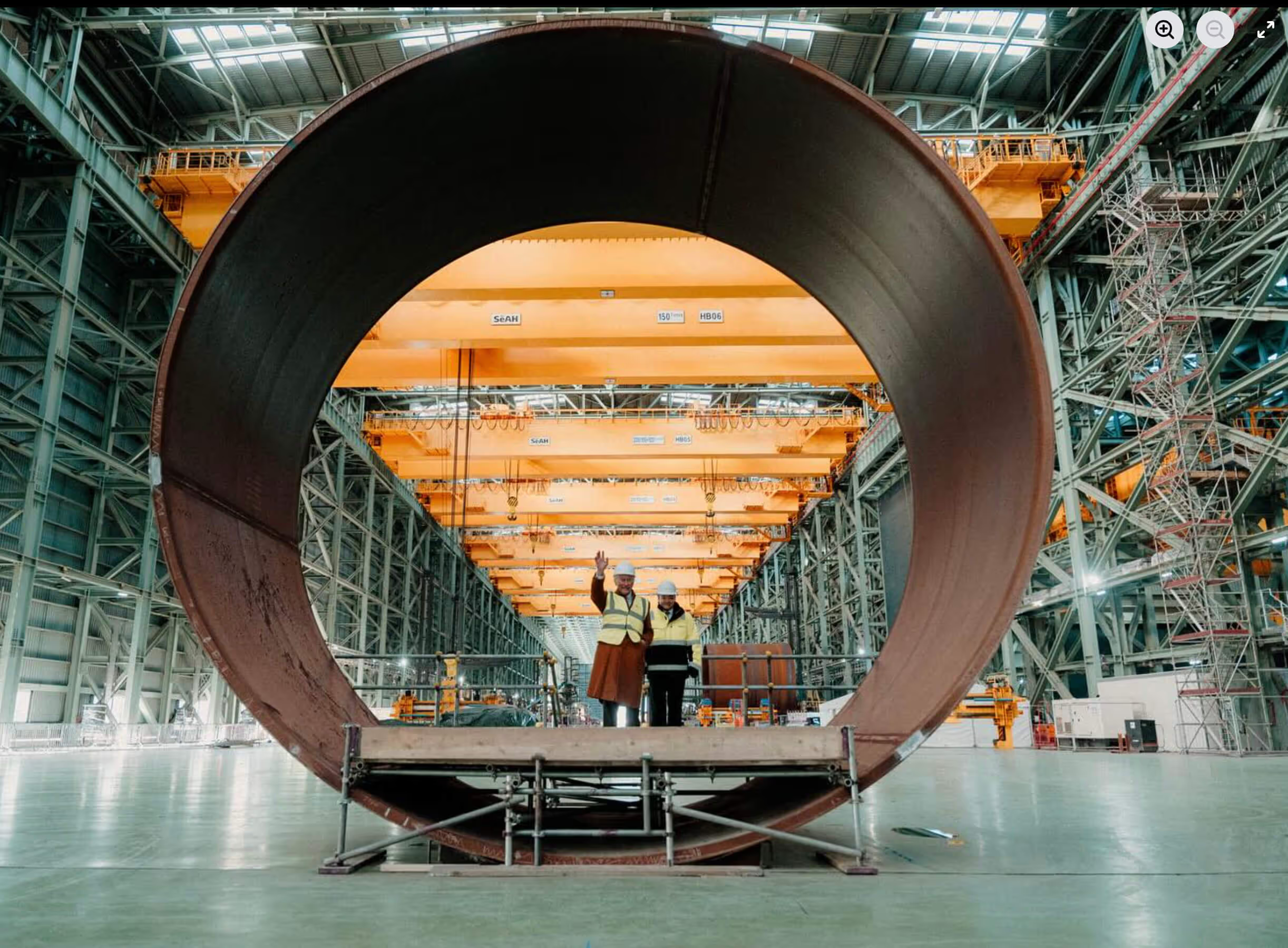
Credit: SeAH Wind
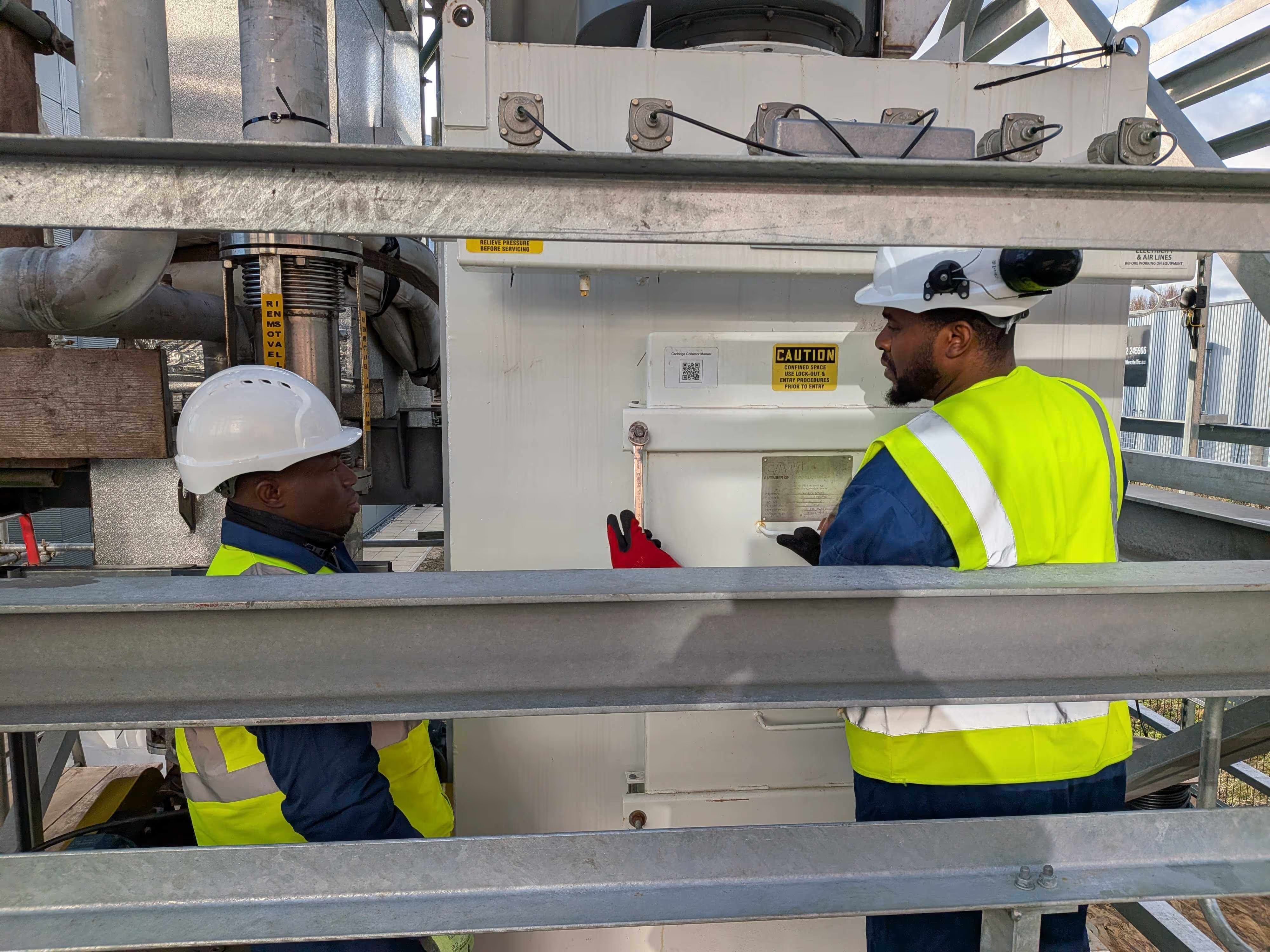
We’ve already proved through larger projects that our underlying technology works. So we’re now focusing Project Tenet on testing new operating parameters. We’re also testing the novel sorbent we’ve been quietly working on for more than two years (and which we protected in a patent in November 2025). The system is so complete that we can apply the learning from it to the designs of the much larger systems we are working on now for our commercial projects.
As a sandbox, Project Tenet will see extended, iterative testing for a long time to come. This week we’ve performed the first of those tests, which is a big milestone. We look forward to showing more in the coming months. Until then, we’re proud (and even prouder as a UK company) to bring online a project that’s been years in the making.
Credit: Tees Valley Combined Authority, Teesworks
